Field Workflow Triage Before a Construction AI Rollout
Audit workflows before deploying AI to avoid automating broken processes.
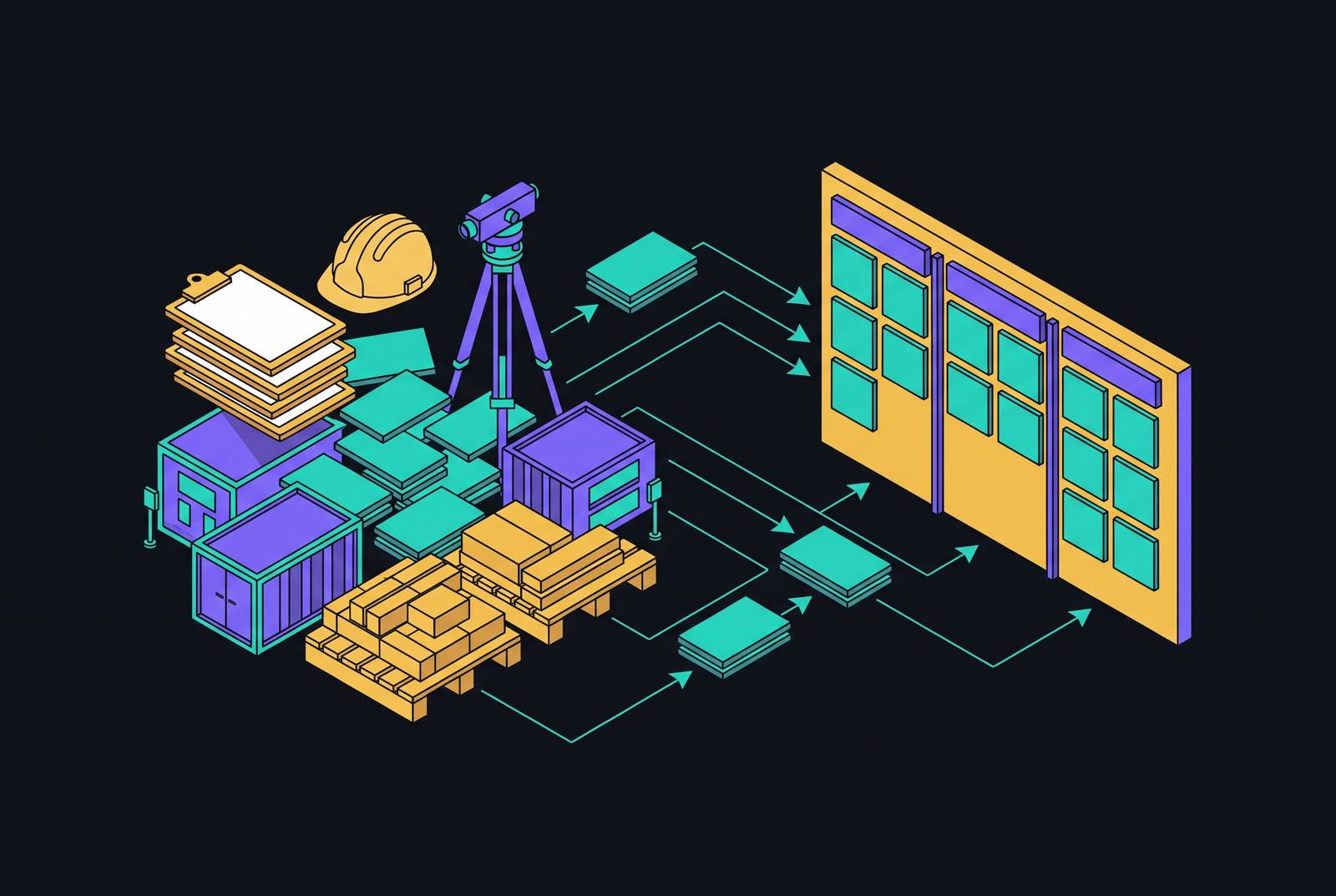
Field workflow triage before a construction AI rollout separates processes that need rebuilding from those ready for automation. The audit must follow actual work through its triggers, data inputs, decisions, and handoffs. The governing distinction is simple. AI can improve a sound but slow process, but deploying it into a structurally broken process accelerates failure.
Why AI rollouts in construction keep failing at the field level
A schedule simulation tool can make detailed recommendations even when the daily logs it uses are incomplete and no one is in charge of responding to its alerts. The tool works. The operating process does not. Faster analysis then produces more signals without creating a dependable way to resolve them. This is the sequencing error behind failed field deployments. A company selects the technology before establishing whether the workflow can support it.
The bottleneck is workflow maturity. A process with inconsistent inputs cannot become dependable just because a model works through those inputs faster. Computer vision can also spot a field problem without creating the missing handoff that puts someone in charge of fixing it. Detection and resolution are different steps. If the second step has no trigger or owner, improving the first leaves the structural break intact.
Tool selection therefore comes after triage. Operations leaders need to know whether a proposed deployment will save work in a process that works or speed up one that lacks basic controls. Answering that question requires evidence about how work reaches the tool and what happens after the tool produces an output. Without that evidence, technical capability is being mistaken for operational readiness.
What "broken at the root" means in a construction workflow, and why it is different from merely inefficient
A daily log process is broken at the root when supervisors record events inconsistently or do not record them at all. AI summarization cannot recover an event that no one recorded. But an estimating workflow that is consistent and complete may just take too many labor hours. Its output is dependable, so reducing the effort needed to produce it is a valid objective for AI augmentation.
An RFI workflow exposes the same distinction at a decision point. If escalation depends on one experienced person knowing when to intervene, a drafting tool can shorten document preparation without resolving when the issue should move forward. A workflow with explicit escalation triggers may still involve laborious drafting, but that delay is different from uncertainty about whether escalation will happen at all.
The practical test is whether the process produces the right output consistently before speed enters the assessment. Inefficiency delays a dependable result. Structural breakage prevents the result from being dependable. Missing handoffs, decision-makers who cannot be reached, and missing data are all forms of structural breakage. Confident AI output is particularly dangerous there because the workflow may also lack a human check capable of catching the error. A polished answer cannot compensate for an undefined standard of correctness.
How declared plans diverge from what is actually happening in the field
Structural breaks are hard to spot in leadership reports because those reports tend to show the declared plan. Energization readiness makes the gap concrete. A project can be described as “power-secured” while its actual grid connection, substation scope, and long-lead equipment remain unconfirmed. The description communicates confidence without establishing the conditions needed for energization. Triage must check each of those conditions.
P6 schedules and similar planning tools capture intent. A scheduled activity shows where the plan places the work. Field evidence establishes whether the prerequisites exist. The distinction is between information that records a commitment and information that supports it. When leadership gets only the former, an unresolved dependency can stay hidden in a plan that looks orderly.
Long-lead procurement offers a useful counterweight because an equipment order either has a confirmed delivery window or it does not. Safety data needs the same close look, with the check focused on how it is recorded. It is a reliable operational signal only when recorded systematically. In both cases, the audit must establish how the information was produced. Before deployment, the audit must establish what an unannounced observation of the workflow would reveal.
How to find broken workflows before rolling out AI, including what to observe and ask
Operations leaders should start by watching the work to get past the gap between what is declared and what actually happens. The people who execute a process should demonstrate it step by step, rather than present how its designers intended it to run. Interviews alone are not enough. The map needs to reach below broad activities such as “update schedule” or “process submittal” to show each input, decision, and manual transfer. Those broad activities can conceal the exact point where information stops moving.
The first diagnostic question concerns the trigger. What starts this step, and is that trigger reliable and visible to the next person in the chain? An RFI or submittal process may appear orderly until the walkthrough reaches an escalation that depends on private judgment. The second question concerns the input. What data does the step consume, where does it come from, and is it consistently available in the same form? For daily logs, this means examining who records events, in what format, how consistently, and whether anyone acts on them promptly.
Who makes the decision, and what happens when that person is unavailable? The walkthrough must distinguish a defined substitute decision path from dependence on an experienced individual. What does failure at this step look like, and how long does it take to become visible downstream? A handoff that fails for days without anyone knowing poses a different automation risk from a slow step whose status is clear.
Construction-specific handoffs make these questions tangible. Schedule reconciliation should expose who updates the plan and whether the foreman validates it before lookahead planning uses it. Watching procurement should show whether a confirmed delivery date reaches the schedule automatically or whether someone has to chase the supplier and update the plan by hand. Commissioning review should distinguish an actual grid connection date from a placeholder. The resulting map should classify steps as structurally sound but slow, or broken at the trigger, data, or decision level.
What the triage reveals about scheduling and procurement specifically, because that is where most field AI fails first
Scheduling and procurement deserve early attention because their hidden breaks directly affect whether a field plan is achievable. A schedule maintained by one person, updated infrequently, and never reconciled with foremen does not provide a dependable basis for AI optimization. The model gets the sequence on record, which may differ from the one being carried out. More detailed recommendations cannot close that gap. Triage must establish the connection between field progress, foreman input, and the version of the schedule used for analysis.
Confirmed order dates and delivery windows distinguish an executable plan from an aspiration. When supplier updates move through manual, person-dependent handoffs, a change may take days or weeks to reach the scheduler. An AI re-sequencing tool then works from a stale procurement picture. Its recommendations can be confident and detailed while remaining wrong about the constraint that governs the work.
An experienced scheduler may have good reason to resist those recommendations. It is not automatically a change management problem. If the input chain has not been reconciled with the field, the scheduler has reason to distrust the output regardless of its presentation. Triage should turn that concern into a testable finding about which data flows must become reliable before deployment. Delivery confirmations, field progress reports, and foreman inputs are the specific flows requiring “better data.
How to decide what gets rebuilt versus what gets automated
The rebuild decision follows from defects in control. Rebuild first when a necessary decision depends on someone who is not always available and has no documented substitute path. The same judgment applies when inputs arrive inconsistently across people, formats, or frequencies, or when failure takes days to become visible downstream. Inconsistent results are another disqualifier. A process that produces different outputs from the same inputs depending on who runs it is not ready for automation as-is.
The automate decision requires a different set of evidence. A candidate should already produce consistent, auditable outputs from structured inputs that are reliably captured and accessible in the same form every cycle. Its decision rules should be explicit enough to write down and verify. Human review must also be meaningful. The reviewer needs to understand what correct looks like, rather than merely approve an output because it appears complete.
For rebuild candidates, the intervention is process redesign. Process redesign requires defining the trigger, assigning ownership, specifying the data format, and establishing the handoff mechanism, then verifying consistent execution before adding AI. For automation candidates, the starting point should be one specific, painful process that passes those tests. A broad platform strategy is not a substitute. The unit of deployment needs to be small enough that its inputs, rules, and outputs can be assessed directly.
Competitive pressure does not reverse this order. Firms deploying AI into broken workflows are accumulating errors with confidence. The cost of correcting those compounding errors is higher than the cost of triage. Waiting indefinitely would also miss the point. Triage exists to identify a defensible starting process quickly while directing repair effort to the breaks that prevent other workflows from becoming viable candidates.
What a rigorous triage engagement actually looks like in practice, and how fast it should move
A rigorous engagement should produce a prioritized process map and a rebuild-versus-automate decision within weeks. It begins with a structured, live or recorded walkthrough of actual execution by the people doing the work. The evidence comes from the process itself. The walkthrough reveals missing triggers, inconsistent inputs, and informal decision paths as it reaches them. This is more useful than a presentation that explains the intended procedure without exposing its exceptions.
Each examined workflow should receive a clear finding of “rebuild first” or “ready to automate,” with the specific condition preventing automation identified where relevant. If triage stretches into months, the scope may be too broad, the wrong processes may have been selected, or observation may have given way to extended consulting activity. A long engagement should prompt scrutiny of the engagement itself.
The first AI-first process should be live within weeks of the rebuild decision. A prolonged gap between diagnosis and deployment suggests that the selected process was insufficiently specific or that the redesign did not resolve its structural break. The operational transformation partner suited to this work starts with a process audit and commits to a live process in weeks. The order of the work should be set without pressure to sell software or keep an advisory engagement going.
Manufacturing and logistics sectors that have moved fastest with AI share a relevant precondition. Their data infrastructure was standardized and auditable before agents were added. Construction firms can establish that same foundation through focused workflow triage.