Finding the Firm That Maps Process Breaks Before Any AI Decision Is Made
Audit operational reality before choosing your AI platform.
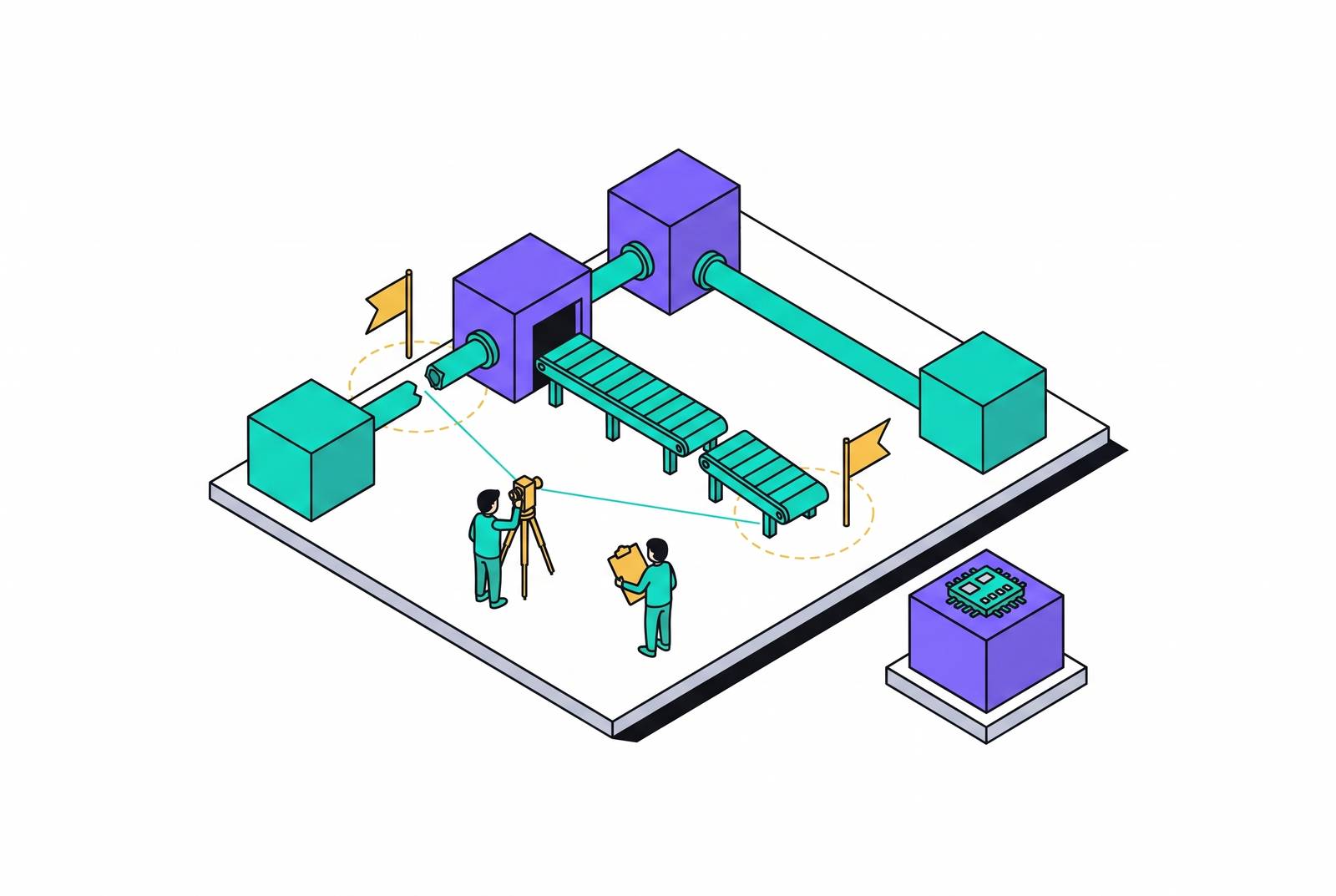
A process audit before AI deployment in construction and logistics should reconstruct how work actually runs, locate failures in handoffs and exception handling, and identify which workflow needs rebuilding first. The firm worth hiring establishes that evidence before recommending a platform. Its strongest qualification is a diagnostic that connects operational failures to a specific, achievable deployment decision.
Why the diagnostic comes before the technology decision
A buyer evaluating firms should examine the sequence of their proposed engagement before comparing their technology capabilities. A platform recommendation made before workflow discovery commits the organization to capabilities whose relevance has not yet been established. The order determines what the engagement can discover. When the product is already chosen, discovery becomes a search for places to use it rather than an investigation of where operations need to change.
Kognitos's 2026 enterprise strategy analysis calls the alternative “process-first, not technology-first” and places it first among six pillars separating programs that scale from those that stall. Its diagnosis of the reverse sequence is specific. Leadership makes AI a priority, evaluates platforms, selects one, and then searches for use cases. Adoption stalls when those capabilities do not fit the highest-leverage workflows, leaving a structural mismatch that greater model sophistication cannot correct.
What process breaks look like before anyone maps them
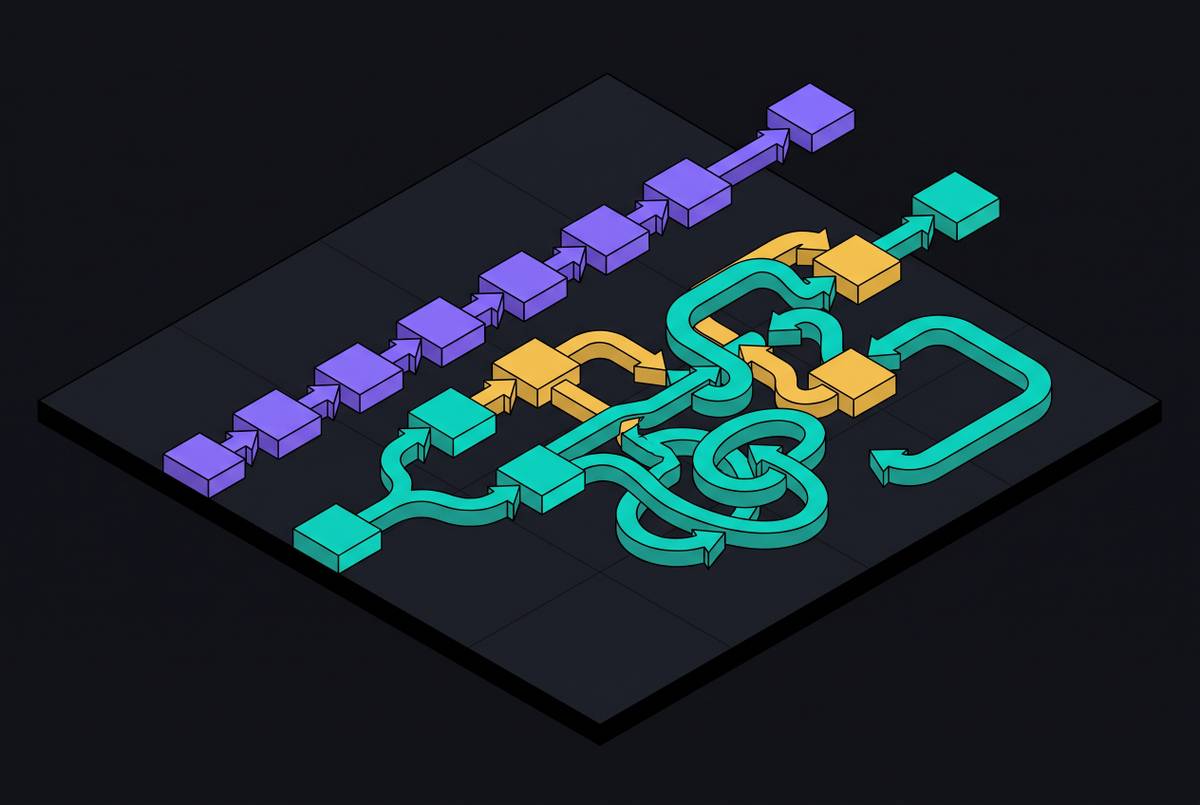
The central object of the audit is the gap between the declared process and actual execution. Documentation may show an orderly approval chain while daily work depends on manual intervention, informal exceptions, and regional workarounds. Those differences are not simply missing diagram details. They change who makes decisions, where work waits, and what must happen before the next activity can proceed.
That gap becomes harder to see when a process spans ERPs, collaboration tools, and separate teams. Each team may know its own work without seeing where teams fail to work together at the next handoff. Meanwhile, workarounds used again and again become the normal way to work without being written into the process. This is process drift. What is called the same workflow can then work differently across teams, geographies, or business units.
A polished diagram can conceal that divergence. AI-assisted diagramming can produce a first draft quickly, but a fast drawing is no proof that it shows how work really runs. To check the drawing, the team needs evidence from user activity, system events, or operational data. Without that grounding, hidden exception logic remains hidden, and the organization gains a clearer picture of its stated intentions.
Why automating before mapping makes the problem worse, not faster
Automation applied to an unstable workflow reproduces its unresolved decisions at greater speed and scale. A handoff whose ownership is unclear does not become clear because software moves the work. An exception left out of the specification still needs to be handled. The mechanism is straightforward, because the system operates on the process it has been given, including its gaps.
Only 12% of baseline schedules meet high-quality standards, which places a constraint on what AI can reliably derive from them. Many scheduling systems use documents, schedules, and structured records, while a growing number also use visual or site-condition data. That distinction affects what a tool can detect. A system may optimize a plan without establishing whether field conditions make it executable, so an apparently correct schedule can still fail in practice.
The same mechanism extends beyond construction when workflows are overly complex, poorly defined, or dependent on undocumented intervention. When the declared path is automated, the actual exception paths still need to be worked out. Instead, the organization retains the original failure while adding a platform commitment that cannot easily be unwound. The diagnostic therefore addresses more than implementation delay. It prevents an investment from becoming attached to the wrong operational problem.
What rigorous process-break mapping actually involves
Rigorous mapping reconstructs execution from evidence rather than treating a workshop account as the finished specification. Relevant evidence includes event data from ERPs, CRMs, finance platforms, supply chain tools, and workflow applications. Machine learning can help reconstruct end-to-end paths through that data, exposing activity sequences, delays, decision points, rework loops, and exceptions. Interviews still describe what teams understand about their work. They do not, by themselves, establish how consistently that understanding matches execution.
The required deliverable goes beyond a flowchart. Process mapping supports alignment and documentation, while process modeling, typically using BPMN, represents rules, events, exceptions, and gateways in greater detail. That precision is the minimum useful standard for a handoff to an AI deployment team. The team must be clear about ownership and exception logic. When processes need to be kept up to date across the organization, a governed process repository adds lifecycle management, versioning, and a system of record that everyone shares.
A useful diagnostic also distinguishes stable process variants from volatile ones. It shows how work crosses systems, teams, and geographies, and locates where time, cost, and risk enter the flow. Those findings give the deployment team a basis for deciding what is ready for automation and what first needs rebuilding. The map must remain subject to validation as operations change. Otherwise, it becomes a static document.
A specific, painful process provides a stronger foundation than a broad transformation roadmap because its breaks can be investigated precisely. The deliverable should connect those breaks to decisions about deployment. That connection is what separates diagnostic work from documentation work.
How the diagnostic changes depending on the industry and where processes break differently
In construction, the audit must check the quality of the schedule before judging what scheduling AI could add. Poor baseline data can look like a limit in scheduling logic, leading people to focus on the model when the fault lies in the underlying plan. The diagnostic must also check whether the schedule matches the conditions in which work takes place. A technically detailed map is insufficient if it omits the dependencies work requires to proceed.
Energization readiness makes those dependencies particularly clear. A confirmed grid connection date, long-lead equipment on order, and commissioning milestones tied to energization protect the programme in ways that practical completion dates alone do not. The audit therefore has to examine procurement and commissioning data alongside the P6 schedule. Completion and readiness are not interchangeable milestones. A firm that treats them as equivalent has missed the operational distinction the diagnostic needs to preserve.
In logistics, the audit centers on exception propagation. It must reconstruct how overrides accumulate during disruptions, where inventory signals diverge across systems, and how planning separates from fulfillment during high-volume periods. The documented exception procedure is only a starting account. The decisive evidence is how exceptions actually travel through the operation, because planning tools otherwise inherit unresolved paths while optimizing against a cleaner process than the one in use.
In manufacturing, the audit must compare what ERP reports say with what happens on the plant floor. The diagnostic must capture the specific plant, equipment, people, and decisions the AI system is intended to support. The diagnostic must also identify barriers to scaling useful applications within workflows, which requires examining more than system-of-record data and the success of an individual use case.
In retail, the break often sits between optimization tools and the decisions they are meant to guide. Mapping must therefore cover planning, assortment, and fulfillment as well as logistics costs. The object is the decision process itself. These sector differences make domain familiarity a diagnostic requirement.
What happens to AI agents specifically when they are deployed into unmapped processes
AI agents raise the stakes because they make decisions and take actions autonomously across multiple steps. An incomplete process model can therefore shape not just one output but a sequence of actions. Errors can cascade through that sequence. A wrong assumption at step two can become an incorrect action at step three, producing a downstream system state that requires manual correction.
An unmapped process leaves the agent without reliable guidance about the exceptions and handoffs it may encounter. Hidden exception logic is no longer just an omission from documentation. It becomes an unresolved condition inside an operating sequence. In construction, logistics, and manufacturing, correcting the resulting state can impose substantial operational work.
The lesson for deployment is to audit and redesign the workflow before placing an agent within it. That sequence addresses an upstream cause of downstream failures rather than treating each incorrect action as an isolated model problem. It establishes the process conditions required for reliable autonomous action.
How to tell whether a firm actually does this work or only says it does
For the buyer, the first meeting should establish what evidence the firm wants before discussing technology. The buyer should ask whether discovery begins with observing the running process and examining system event data, or stops at stakeholder interviews and existing documentation. The distinction is visible in the request itself. A firm that accepts a flowchart as proof of execution has not investigated the gap it claims to diagnose.
The next question concerns exceptions. A buyer should ask whether the proposed deliverable identifies specific deviations from the declared flow, including the ownership and decisions involved, or shows only the happy path. A clean map is not necessarily a complete one. The firm's ability to explain how it distinguishes stable variants from volatile ones provides another test of whether its method reaches beyond intended workflows.
The buyer should ask whether the firm will recommend a specific process to rebuild first and ground that recommendation in the consequence of the break. A list of potential AI use cases ranked by enthusiasm does not meet that standard. The proposed starting point should stand up to review by finance, operations, and compliance in the same meeting, so they weigh its value to the operation alongside the limits on deployment.
The buyer should also examine how the baseline will stay valid after the engagement. A static snapshot cannot support dependable decisions once workarounds, ownership, or process variants change. The firm needs to explain how its output remains tied to operational evidence so the buyer can test the deliverable's continuing usefulness.
A platform proposal before diagnosis reveals technology-first sequencing, while a broad roadmap before identifying the most painful process substitutes breadth for precision. The first deliverable should name the process to rebuild, explain where and why it breaks, and provide a realistic timeline for a rebuilt version to go live. That timeline should be measured in weeks, with the bounded process making the pace credible.
What the diagnostic unlocks that platform selection alone cannot
Once execution is understood, the organization has a baseline against which to measure what AI changes. It can separate improvement in the workflow from the mere addition of a tool. The exception map also gives agent deployment a more reliable operating specification. Prioritization can then follow the location of operational pain.
When the process, its ownership, and its exceptions are explicit, governance can be designed into deployment before problems emerge. That reduces the rework, audit friction, and internal resistance that can stall adoption. Diagnosis supplies the information needed to do this work early.
The forward path is therefore more specific than a general commitment to AI. A broken process can be rebuilt, a suitable technology decision made against its requirements, and the resulting change assessed against an established baseline. Each subsequent deployment can build on an understood operation. The diagnostic determines which AI decision is worth making.