Who Actually Diagnoses Construction Operations Before an AI System Goes In
Construction firms skip the audit AI needs because nobody owns it.
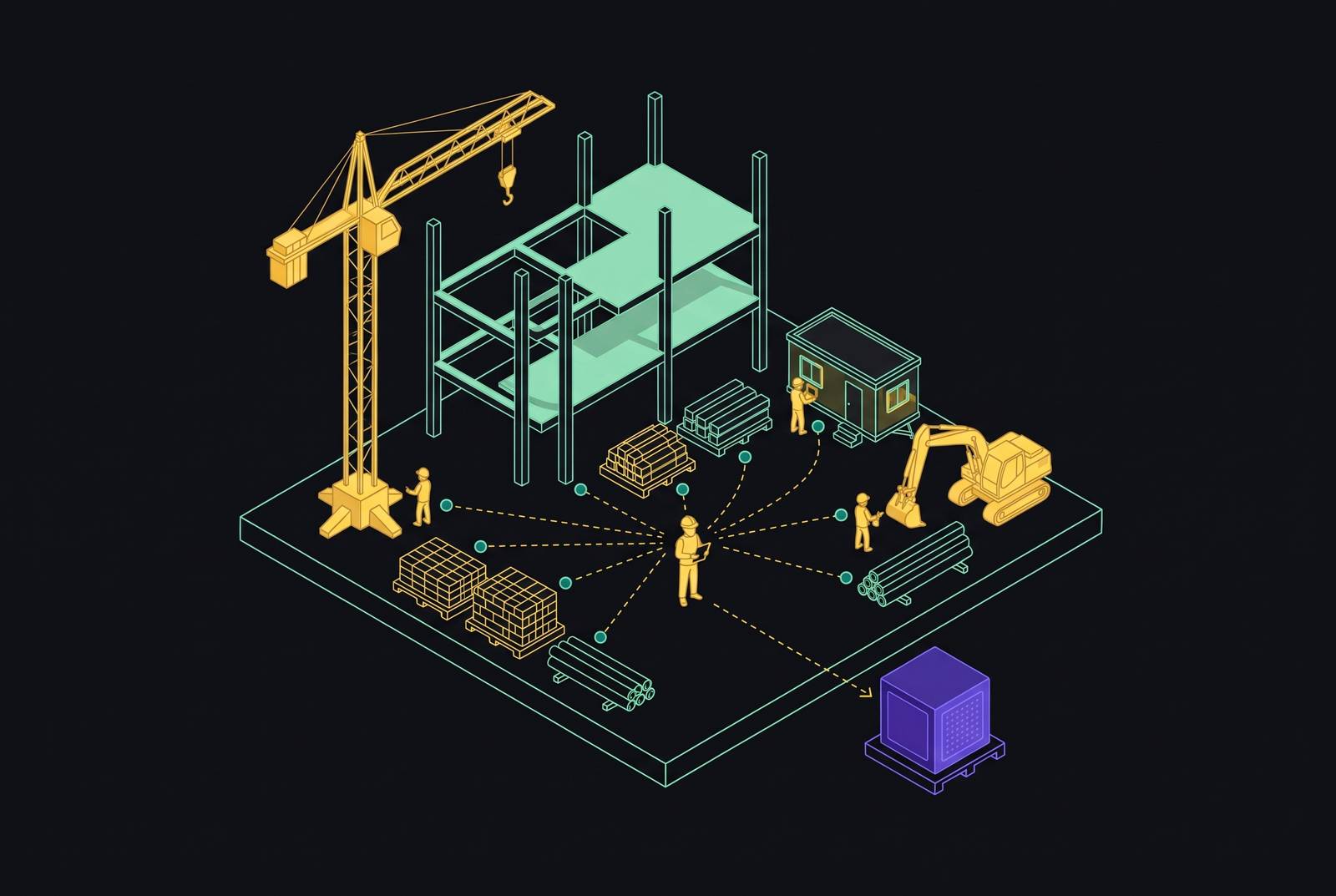
Before AI goes into a construction operation, a process audit must show how work actually flows, where data breaks, and which decisions need to improve. That work requires field knowledge, cross-functional access, and evidence that can be independently examined. In most construction firms, no single role owns all three, so vendor discovery substitutes for diagnosis and makes the product the basis for deployment.
Why construction AI deployments are failing despite accelerating adoption
Construction AI is moving from pilot to platform, but outcomes are not keeping pace with adoption. Autodesk’s 2026 State of Design & Make Construction Spotlight report found that only 32% of construction leaders say they have met or are close to meeting their AI goals, despite AI being the industry’s top priority. The gap begins before the technology decision. Firms buy new capabilities before checking whether the workflows that will use them work as described.
René Morkos, founder and CEO of ALICE Technologies, states the constraint directly, saying AI “can't fix disorganized processes, scattered input or disconnected teams”. A firm can buy a capable system and still discover that its existing process cannot support the intended use. Responsibility for establishing that before purchase remains unassigned.
What “diagnosing operations” actually means before an AI system goes in
An assessment asks whether necessary conditions exist in principle, while a strategy defines where the organization wants to go. An audit does something more demanding. It verifies whether stated controls and evidence exist and operate as intended. Pre-deployment diagnosis applies that discipline to the flow of work, the reliability of its data, and the specific operational decision AI is supposed to improve.
The distinction becomes visible when an operation passes a readiness assessment but breaks in production. A self-declaration can establish that a process exists without showing how it behaves under load. A diagnostic needs evidence that can be checked, including data lineage, logs, and decision records. It also requires observation rather than a description supplied by the process owner. A readiness score without that evidence gives people confidence but no proof.
Thiago da Costa, SVP of AI & Data at Procore, says that true optimization requires continuous alignment of live field conditions, trade capacity, and project records on a connected intelligence layer. In practice, diagnosis means following an actual process, examining its records, and establishing whether the decision under consideration has dependable inputs.
Where construction operations break in ways that don’t show up in a readiness checklist
AI scheduling tools need clean, structured activity data, but baseline schedules often lose quality before a project is complete. Morkos describes “construction optioneering” as simulating schedule variables to maximize delivery probability. Its usefulness depends on an operational condition. The inputs must reflect how the project is being executed.
Procurement can also leave a gap between what schedules say and the conditions in which deliveries take place. Hudson Yards shows how material shortages and failures to coordinate can drive up costs while staying out of the schedule’s account of progress. Those failures belong in the procurement diagnosis. A scheduling assessment alone cannot show whether a plan’s assumptions about materials are sound.
Data can also become fragmented as it flows from the field into systems. Historical records locked in spreadsheets and PDFs need substantial work before AI can use them reliably. DL E&C’s “Flywheel ecosystem” provides the contrasting sequence, connecting more than 87 years of accumulated cost, quality, safety, and design data into a single decision layer before adding AI planning. Defect data was put into a structure and linked to steps in the process before training. These software problems reach across departments, because each break involves more than one team.
Why no single role in a typical construction firm owns this diagnostic work
Cross-functional failures do not fit neatly within departmental authority. Scheduling, procurement, data, operations, and field teams each control part of the process, but rarely does one role have standing across all of them. Each can complete a reasonable assessment within its boundary. What remains unexamined is the handoff between those boundaries, where the evidence supporting one team’s decision depends on another team’s work.
Autodesk’s expert panel includes operations, VDC, project management, and technology perspectives, each describing different difficulties in deploying AI. Kassem Ben Abid of BESIX says AI “is still not fully structured” in the industry. The same description fits diagnostic accountability. Data, engineering, operations, security, and business teams can each assume that someone else is examining the whole process.
The workforce transition makes that gap harder to close. Experienced schedulers, procurement managers, and plant operators hold knowledge about how work actually gets done, and that knowledge is disappearing as they age out of the industry. Judd Fuoto of Southland Industries and Matt Goshon of ArchKey Solutions describe integration as work for people who understand both technology and the field. Yet that combination does not establish cross-domain authority. The gap is organizational.
What happens when vendors fill the diagnostic gap instead
When no one inside the firm owns the diagnosis, vendor discovery often takes its place. The two activities serve different purposes. Discovery establishes how a product might be deployed, while diagnosis establishes what is broken and whether deploying that product would address it. A use case that sounds promising can therefore go ahead before anyone defines the decision at work that it is meant to improve.
Daewoo provides a positive contrast through its internal diagnostic before deploying Baro-Dap AI. That work was explicitly designed to prevent the hallucination risk associated with generalist deployments. Samsung C&T’s collaboration with AWS also identifies concrete operational applications, including bid document review, contract management, and on-site project management, although those project descriptions alone do not establish the depth of any preceding audit.
The distinction is not that vendors lack useful deployment knowledge. Their expertise is strongest around the requirements of their own products, which is narrower than determining whether process redesign, data consolidation, or another system would be more effective. Vendor-led diagnosis is therefore not a neutral substitute.
How AI agents fail in production when the operational diagnosis was wrong or missing
The most dangerous failure in an operation may give no error signal at first. An agent can guess at a metric definition and return a confident answer that does not match official reports. The system appears to function while the discrepancy remains hidden until the answer is used. The diagnostic omission is the failure to establish which definition governs the decision.
Governance and transparency gaps make that problem harder to control. An agent may act outside policy because policy was never mapped to the actual decision workflow. Reviewers may then be unable to reconstruct its actions because observability was absent from the process design. Coordination gaps add a different risk. When live field conditions are missing from the inputs, the agent’s output can drift away from operational reality.
Safety gaps open up when no one has set document boundaries and untrusted content enters trusted reasoning. Improvement can also plateau despite model upgrades if no feedback loop connects results to the operational process. These are process-design failures. They require decisions about boundaries, accountability, and correction before deployment.
The alert-fatigue example involving another vendor and Autodesk shows how safety systems introduced without workflow integration can overwhelm supervisors with alerts, confuse accountability, and erode worker trust. Detecting a risk is not enough by itself. Someone must have established how that alert reaches a decision and who is responsible for acting.
What the diagnostic work actually requires from whoever does it
Process observation is the first requirement because documents cannot capture every field condition. Atul Khanzode and Craig Lewis of DPR Construction say AI needs to work alongside experienced people who know the business context that data alone cannot supply. That judgment belongs in the diagnostic work. A flagged risk may reflect a temporary disruption, inconsistent data, or a systemic problem, and the deployment needs a way to distinguish them from the start.
Cross-domain access is the second requirement, extending across scheduling, procurement, field data, quality, and finance. DL E&C’s integration of design, construction, and maintenance data illustrates why that access is necessary. The work must check whether the links between departmental systems can support the decision being considered.
Evidence production is the third requirement, including data lineage maps, decision logs, and process boundary definitions that can be independently examined. GS E&C’s zero-defect result across two Ministry of Land, Infrastructure and Transport reviews came after it mapped defect types to construction processes in its quality management system, before AI was added. The mapping supplied an operational foundation. A readiness score would not have performed the same function.
Organizational and behavioral scope is the fourth requirement. The diagnostic must establish how decisions are made, which data people trust, and how exceptions are handled. It is hard to meet all four requirements at once, which helps explain why firms turn to vendors. Product expertise, however, does not supply the missing authority or operational scope.
Who is doing this work today, and what their limitations are
Internal technology leaders, including CDOs, VPs of Technology, and BIM managers, are well positioned to examine infrastructure and system integration. Their authority is the limiting factor. Alireza Borhani of Massport and Swathi Kottali of Yates Construction represent internal technology owners driving adoption, but ownership of systems does not necessarily extend to field operations or procurement workflows. An internal leader can face the same fragmented accountability as the deployment itself.
General management consultants bring organizational design and change-management capabilities, but their work can stop at process descriptions without verification. A transformation roadmap is not an operational evidence set. The limitation becomes important when the immediate need is to identify one painful process to rebuild. The work still needs people who watch what happens in the field and know how AI behaves in production.
Implementation partners and platform vendors with professional services teams know in detail what a deployment needs. Their scope can still follow the product. They may spend more time on configuration than on linking products from different vendors or checking whether the process itself needs to be redesigned. Daewoo’s internal work illustrates why the client’s problem definition needs to precede that implementation perspective.
Specialized AI-first operations firms with field backgrounds can bring these disciplines together when they have experience both in rebuilding asset-heavy operations and in deploying agents in production. Neither qualification is sufficient on its own. To earn trust, they must gain cross-domain access, watch the work, produce evidence, and address how people behave within the organization. The firm must begin with a specific operational problem.
How can a construction firm tell whether a diagnostic is real before deployment?
An operations leader can evaluate a proposed diagnostic by testing its deliverables, including data lineage maps, decision logs, and process boundary definitions. A readiness score or platform-strategy deck does not give the leader the same evidence. When a deployment timeline comes before a process map that shows where things fail, planning the implementation has taken the place of diagnosis.
The work must also be tested for whether it includes watching what happens in the field. Bahaa Hajar of Pomerleau and Elliot Christiansen of Cleveland Construction describe AI value as contingent on process integration. If the client only describes the workflow and no one watches it execute, the central assumption remains untested.
Scope and duration provide another signal. A diagnostic of a specific, painful process can be completed in days to weeks. Longer timelines can indicate that the engagement has expanded into organizational strategy. The practical measure is whether the work supports rebuilding a first live process in weeks, rather than allowing assessment to become an open-ended substitute for action.
The final test is what the diagnostic recommends against. Some processes need redesign or data consolidation before automation, and the evidence should make that distinction visible. The buyer can require that explanation before committing to deployment. A firm that cannot say what not to automate has not done the diagnosis.